I build scalable web applications, extract insights from data, and simulate transport systems — bridging the gap between software engineering, data science, and mobility technology.
Who I am
As a Transportation Technology student, I'm driven by the vision of revolutionizing mobility through smart technology. I'm a versatile Python developer proficient in backend systems, frontend development, data science, and transport simulation.
I blend software engineering with data-driven analysis and simulation tools to tackle real-world transport challenges — from building web apps to modeling traffic flow and training machine learning models.
Download ResumeTools of the trade
What I've built
Web applications built end-to-end with Python backends
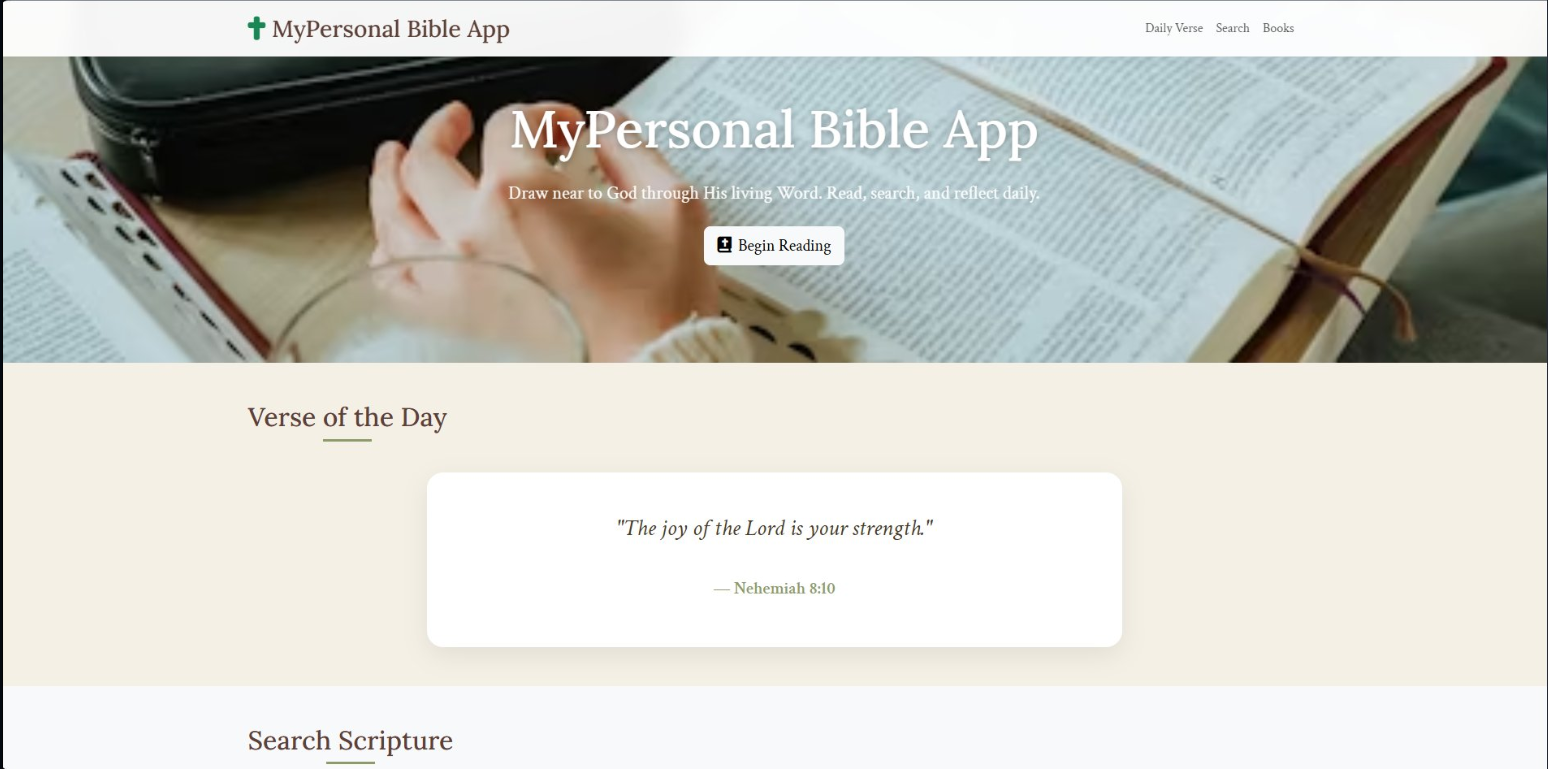
A peaceful web app to read, search, and meditate on Scripture with multiple versions and daily verses.
Transform PDFs, documents, and books into high-quality MP3 audio files using text-to-speech technology.
A fully functional blog application with complete user authentication and role-based access control built with Python and Flask.
Discover movies via TMDB API and manage your personal collection with full CRUD functionality and database storage.
Exploratory analysis, predictive models, and data storytelling
An end-to-end machine learning study exploring how transport accessibility and socioeconomic factors influence housing prices in Boston. The project covers the full data science pipeline from data cleaning, EDA, regression, classification, clustering, and feature importance analysis using the classic Boston Housing dataset.
A data-driven exploratory analysis of real-world traffic volume patterns over time. The project involves cleaning and parsing datetime traffic data, then producing multiple visualizations time series line plots, KDE density plots, hour-by-hour box plots, and interactive day-of-week bar charts to identify peak periods, demand distribution, and flow trends across the day and week.
A synthetic traffic prediction system leveraging volume, weather, road conditions, and incident data. Includes EDA (correlation, hourly trends, rain‑delay analysis, accident impact), congestion classification, and delay regression using Decision Tree, Random Forest, and XGBoost, evaluated via Accuracy, F1, MAE, RMSE, and R².
Simulation, modelling, and spatial analysis of transport systems
A Python-controlled traffic simulation built on SUMO and TraCI that monitors vehicles in real time. The simulation runs a custom SUMO network and route configuration, tracking each vehicle's speed, position, and distance traveled per simulation step while extracting edge-level traffic metrics such as average speed. Designed as a foundation for traffic analytics and ML-ready dataset generation.
An open-source Python CLI tool that replicates and extends SUMO's built-in osmWebWizard.py. Starting from a raw .osm file from OpenStreetMap, it automates the full pipeline — generating the road network, multi-vehicle route files (cars, buses, trucks, bicycles), trip files, and all SUMO configs. Users then choose to either edit traffic lights in netedit or launch the simulation immediately.
A SUMO road network configured and exported specifically for 3D visualisation and real-time integration with Unity via the Sumo2Unity framework. The network (.net.xml), simulation settings (.netecfg), and SUMO configuration (.sumocfg) were prepared and tuned to run seamlessly within a Unity environment enabling immersive, real-time 3D traffic simulation rendering from a live SUMO backend.